
AI Fraud, Fake Streams, and a $10M Lesson in Reputation
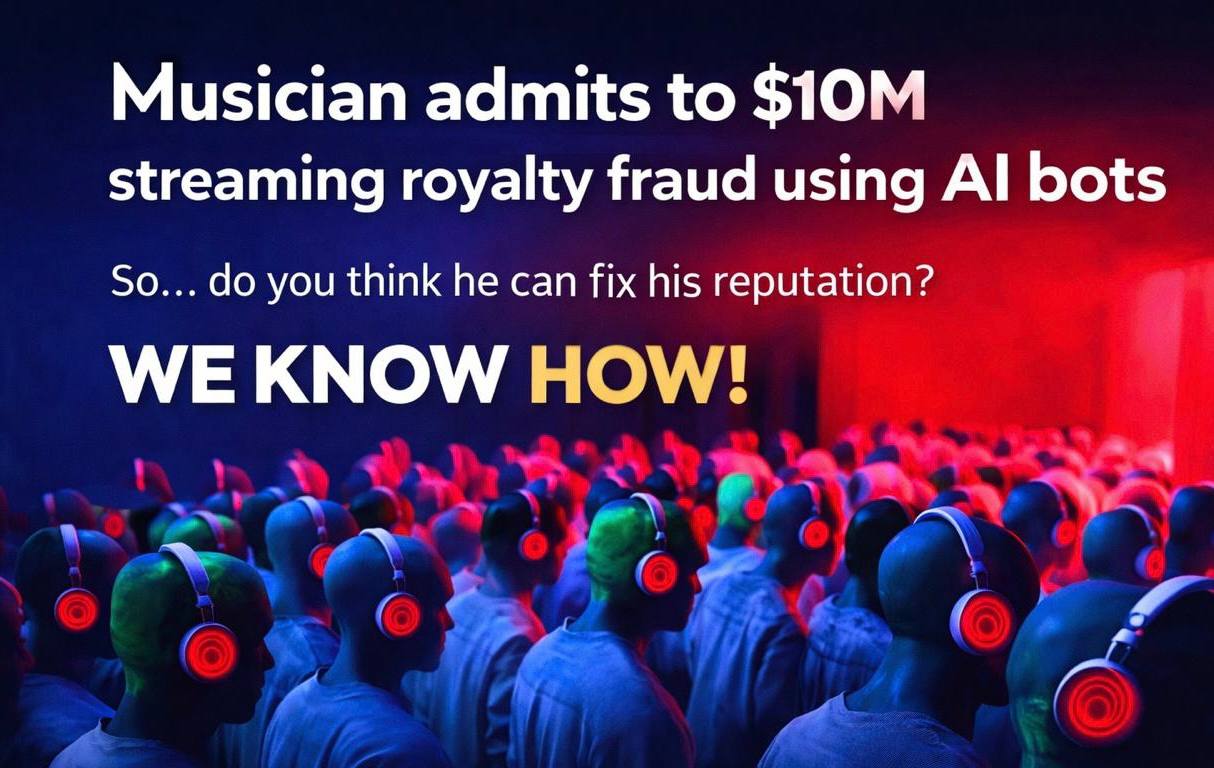
The story sounds like something out of a tech thriller – but it’s real. A musician has admitted to orchestrating a massive streaming fraud scheme worth over $10 million, using AI-generated tracks and bots to manipulate platforms like Spotify, Apple Music, YouTube Music, and Amazon Music.
According to an official statement from the U.S. Department of Justice (read the full press release), Michael Smith created hundreds of thousands of AI-generated songs and used automated bot networks to stream them billions of times. Using fraudulent methods, this allowed him to collect millions in royalties intended for real artists.
Additional reporting by BleepingComputer coverage confirms that the scheme generated over 4 billion fake streams and more than $10 million in payouts. The case is now considered one of the first large-scale prosecutions of AI-driven fraud in the music industry.
At first glance, it might look like a clever use of technology. In reality, it’s a reputational collapse with long-term consequences.
Smith has pleaded guilty, agreed to repay over $8 million, and now faces up to five years in prison.
But beyond legal penalties, there’s a bigger question:
Can a reputation recover from something like this?
But the Real Damage is Reputational
Financial losses can be calculated. Reputation damage cannot.
Once your name becomes associated with fraud, manipulation, and AI abuse, it spreads instantly across:
- Google search results
- Media coverage
- AI-generated summaries
- Industry databases
And unlike money, reputation doesn’t reset after repayment. Today, your digital profile becomes your identity. And once negative narratives dominate it, they influence every future decision about you.
AI Changed the Game – For Fraud and Reputation
Ironically, AI enabled both the fraud and the scale of its consequences. Modern AI systems don’t just display links. They summarize who you are based on available data.
So when someone searches “Michael Smith,” AI tools will likely generate answers containing:
- “fraud”
- “AI bots”
- “fake streams”
This is algorithmic reputation. And that directly impacts:
- customers’ trust;
- banking and compliance decisions;
- investment opportunities;
- partnerships and contracts.
Because today, reputation = access. As highlighted in the Reputation City framework, reputation has effectively become a new form of KYC – a prerequisite for trust, compliance, and business growth.
So… Can He Fix It?
Short answer: yes. Real answer: only with a strategy. Reputation recovery in 2026 is not about deleting articles or hiding links. That approach no longer works.
Instead, it requires rebuilding your entire digital narrative.
This includes:
- search engine reputation restructuring (SERM);
- publishing verified, authoritative content;
- strategic media positioning;
- and most importantly, influencing how AI systems interpret your identity.
At Reputation City, this is called Generative Exposure Optimization (GEO) – shaping the data ecosystem so AI tools reflect a controlled, credible narrative. Because today, it’s not enough to rank in Google – you need to control what AI says about you.
The Bigger Question
This case is not unique – it’s just early. As AI tools become more accessible, similar stories will become more common. Fraud, manipulation, synthetic content – and reputational collapse will follow.
So here’s the real question: If tomorrow your name appeared in headlines like this – what would AI say about you? And more importantly…
Would you know how to fix it? We Do!
At Reputation City, we manage and design reputation.
We help businesses and individuals build digital identities that:
- build trust;
- help to pass due diligence;
- gain trust;
- survive crises;
- and remain resilient in an AI-driven world.
Because today, your reputation is what people think and even more – what algorithms believe. And that’s something you can – and should – control.
If you want to understand how AI is already reshaping not just reputations, but entire industries – including media, traffic, and visibility – we highly recommend reading our latest analysis: https://reputation.city/news/googles-ai-answers-disrupting-the-media/
Because the real question is no longer what people see about you online – but what AI decides to say about you first.