
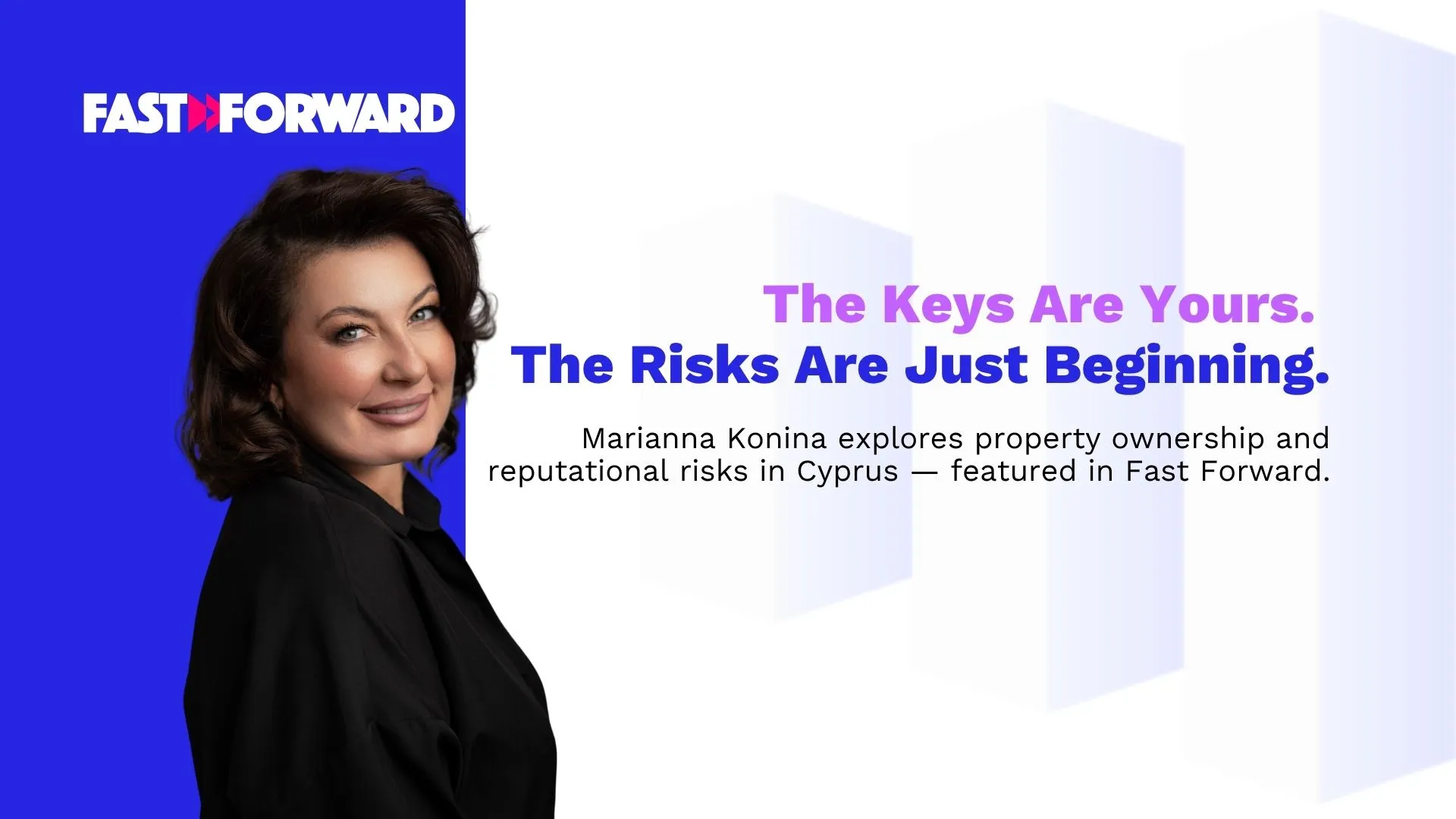
The sale is complete. The buyer has the keys. But who answers the phone when something goes wrong?
For developers, brokers, and advisers, a completed transaction can feel like a success. For the property owner, it begins a relationship that may last decades. Management, maintenance, rental arrangements, and changing circumstances all test whether the experience matches what was promised before signing.
This is the focus of a new expert article by Marianna Konina, Founder and CEO of Reputation City, published in Fast Forward on 30 September 2026. Titled “When the Property Purchase Ends — The Ownership Risks Begin”, it examines the decisions and responsibilities that remain after a Cyprus property transaction closes.
A Completed Transaction Is Only the Starting Point
Drawing on the first day of Cyprus Property Week, held at UCLan Cyprus in Larnaca on 9 September 2026, the article explores ownership from the international buyer’s perspective.
It brings together insights from Natalie Minervina, Founder and Managing Broker of Fortuna Plus Realty, and Daria Boston, Director of Boston Studio. Their contributions address the support buyers need beyond the purchase, including relocation, management, furnishing, and preparing a property for occupation or rental.
Marianna connects these practical challenges with reputational security: whether responsibilities are clear, expectations are realistic, and the businesses supporting an owner remain reliable over time.
For Reputation City, the implication is straightforward.
The post-purchase experience becomes evidence of whether a business deserves the trust that helped secure the sale.
Unclear Responsibilities Can Become a Trust Problem
Consider an overseas buyer who expects an apartment to generate rental income shortly after completion. The property may be legally transferred, but furnishing, installation, and management arrangements may still be unfinished.
If no one clearly explained those requirements, the owner may see the delay as a broken promise. The developer, broker, and service providers may each believe they fulfilled their obligations, while the buyer cannot identify who should resolve the problem.
This is how an operational gap can become a reputational dispute.
The risk grows when sales materials suggest comprehensive support, but the actual service ends at handover. It also grows when responsibilities depend on informal conversations or one representative’s availability.
We recommend making the ownership journey explicit before the transaction closes. Buyers should understand what is included, what requires a separate agreement, and who remains responsible afterward.
Due Diligence Needs Updating
The article also challenges the assumption that an assessment completed before purchase remains sufficient throughout ownership.
A management company, rental operator, or other provider may support an asset for years. Leadership, service quality, and business circumstances can change during that relationship.
As Marianna states in the article:
“Reputation changes continuously. A company audited six months ago can look very different today — and problems are easier to handle early.”
Assess a complaint in context. A positive initial assessment should likewise remain open to revision when credible new evidence emerges.
For owners, periodic reassessment helps identify relevant changes. For service providers, consistent reporting and a clear response process help preserve confidence when difficulties arise.
How Property Businesses Can Reduce Reputational Exposure
Reputation City recommends four practical steps.
Define the service beyond completion. Explain the scope, duration, fees, exclusions, and responsibilities of continuing support.
Document the handover. Provide accessible records, contacts, service agreements, and a clear route for raising problems.
Align promises with delivery. Review website content, brochures, and sales conversations against what operational teams can actually provide.
Monitor ongoing relationships. Track recurring complaints, service failures, and relevant provider changes. Investigate patterns and address their causes.
These measures give buyers clearer expectations and businesses a stronger basis for explaining their responsibilities.
Thank You to Fast Forward
We thank the Fast Forward editorial team for publishing Marianna’s perspective and creating space to discuss the years beyond a property purchase.
For Cyprus, reliable ownership support can strengthen confidence in individual businesses and the wider investment environment.
For a broader look at what builds investor confidence, read Marianna Konina’s insights on investment readiness in Cyprus and discover why delivery, transparency, and reputational security matter before a deal is signed.
Have a questions? Let's get in touch
→ Contact us: hi@reputation.city