
Most AI Marketing Isn’t AI. It’s 20-Year-Old Analytics Wearing a New Name.
Everyone is selling “AI-powered” solutions. But how much of it is actually artificial intelligence?
Today, almost every company claims to use AI. From marketing platforms to customer service tools, the term has become a universal label attached to almost any technology. Yet according to Andrew Pearson, Founder and CEO of Intelligencia Limited, much of what businesses call AI today is simply advanced analytics, automation, and machine learning techniques that have existed for decades.
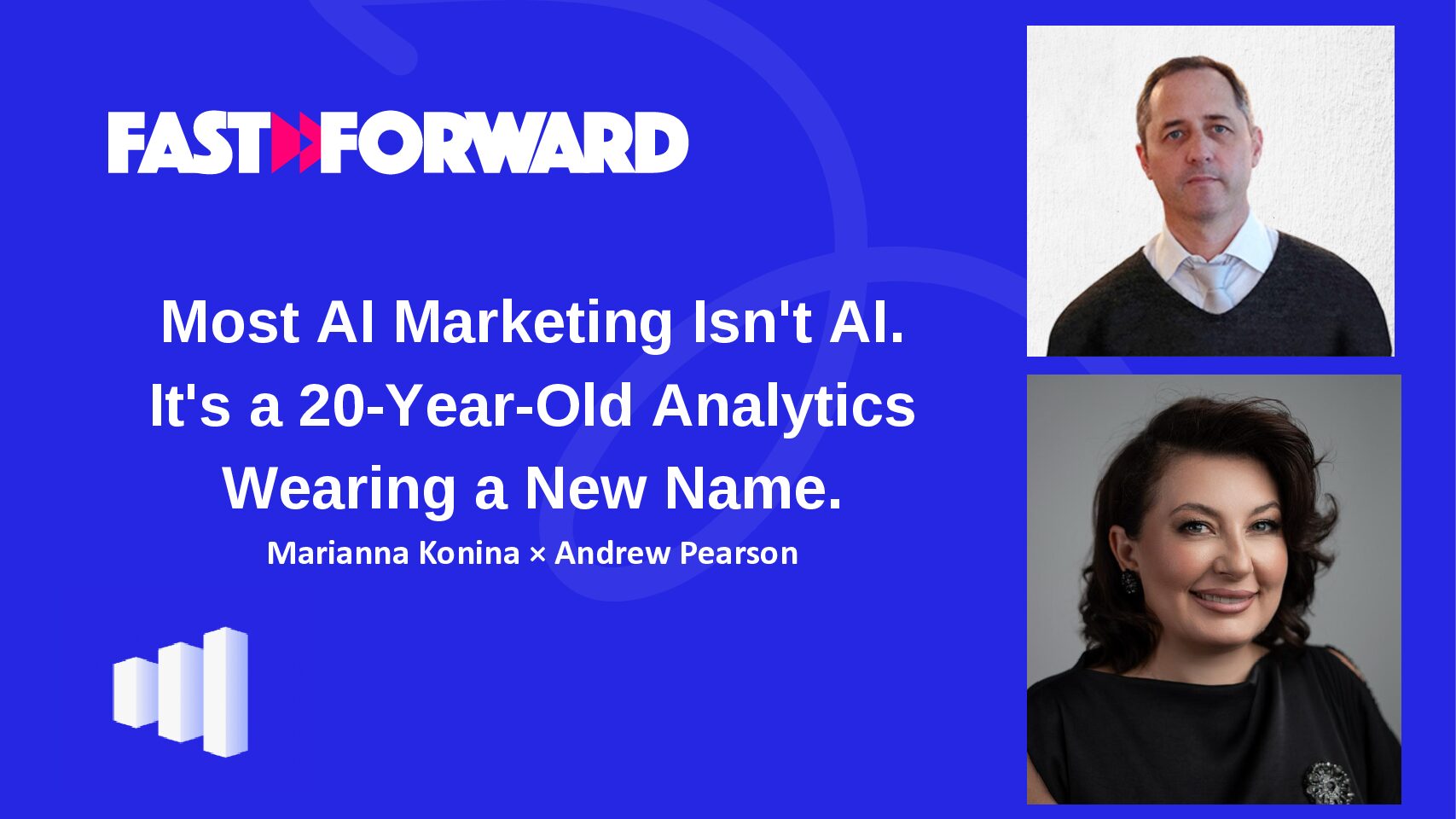
In the latest issue of Fast Forward Magazine, Marianna Konina, Founder & CEO of Reputation City, spoke with Andrew Pearson, Founder and CEO of Intelligencia Limited, about one question every business leader should be asking today: Are we actually using artificial intelligence – or simply calling decades-old technologies AI?
For Reputation City, contributing to Fast Forward Magazine was more than an opportunity to publish another expert piece. As a company helping businesses build trusted digital identities across search engines and AI platforms, we believe understanding how AI interprets information is becoming just as important as understanding the technology itself.
AI Has an Identity Problem
One of the key messages from the conversation is that the market has become flooded with products labeled as AI, even when they rely on technologies that have been around for twenty years. Predictive analytics, recommendation engines, customer segmentation, and automation are now frequently rebranded as “artificial intelligence.”
The issue is not that these technologies lack value. Many of them deliver impressive business results and help organizations make better decisions.
The real problem is expectations.
When businesses believe AI is a magical solution that can replace expertise and strategy, they risk investing in hype rather than solving real challenges. As Andrew Pearson explains, successful AI projects still depend on quality data, clearly defined objectives, and human expertise – not marketing buzzwords.
AI Is Only as Good as the Information It Learns From
Another major takeaway from the discussion is that AI systems do not create knowledge on their own, whereas they learn from existing information.
That includes company websites, media publications, business directories, social media profiles, expert articles, public databases, and countless other trusted online sources. This is exactly where reputation becomes a strategic business asset.
At Reputation City, we have long believed that companies should stop thinking only about SEO and start thinking about how AI understands their business.
If your digital footprint is fragmented, outdated, or filled with conflicting information, AI systems are likely to reproduce those same inconsistencies when someone asks about your company.
If no trusted information exists, AI cannot confidently recommend your business.
The Future of Marketing Is Becoming the Answer
One of the most interesting insights from the conversation is how AI is transforming digital marketing itself.
For years, marketing strategies focused on generating clicks, impressions, and website traffic. Today, more people are asking ChatGPT, Gemini, Claude, and Perplexity direct questions instead of scrolling through search results. Users increasingly expect AI to provide one reliable answer rather than dozens of links.
That changes the rules completely.
Success is no longer measured solely by where your website ranks on Google. Increasingly, businesses need to become the trusted source that AI chooses to reference. This shift is already reshaping how companies approach visibility, authority, and digital communications.
Reputation Is Becoming AI Infrastructure
This is why Reputation City has invested heavily in helping businesses prepare for the AI-first information environment.
Our work extends far beyond traditional online reputation management.
Through Generative Exposure Optimization (GEO), we help companies build structured, verified digital identities that AI platforms can confidently understand, reference, and recommend. By strengthening trusted narratives across credible media, search engines, and authoritative online sources, we help businesses influence how AI describes them.
As we often say: Reputation is the new KYC.
Today, reputation affects compliance procedures, investor confidence, partnership opportunities, and, increasingly, how artificial intelligence evaluates and presents your business.
Beyond the AI Hype
As Marianna Konina discusses throughout her conversation with Andrew Pearson, the future of AI will not be defined solely by increasingly sophisticated models but by the quality, accuracy, and credibility of the information they rely on.
For businesses, this means reputation is no longer just a communications asset—it is becoming a critical part of the infrastructure that shapes trust in the AI era.
At Reputation City, we believe this shift is only beginning. Businesses that start managing their digital identity today will be the ones AI trusts tomorrow.
Read the full interview with Andrew Pearson in Fast Forward Magazine: https://fastforward.com.cy/people/andrew-pearson-intelligencia-limited-most-what-we-call-ai-marketing-20-year-old-analytics