
Marianna Konina’s article for Fastforward (CY): How We Are Getting Our Time Back
Artificial intelligence has become one of the most discussed topics in business today. Every week brings another prediction about automation, another breakthrough technology, or another debate over whether AI will eventually replace human expertise.
But after speaking with founders, innovators, communication specialists, and AI entrepreneurs over the past year, one conclusion stands out above the noise: the future lies in how humans choose to work alongside machines.
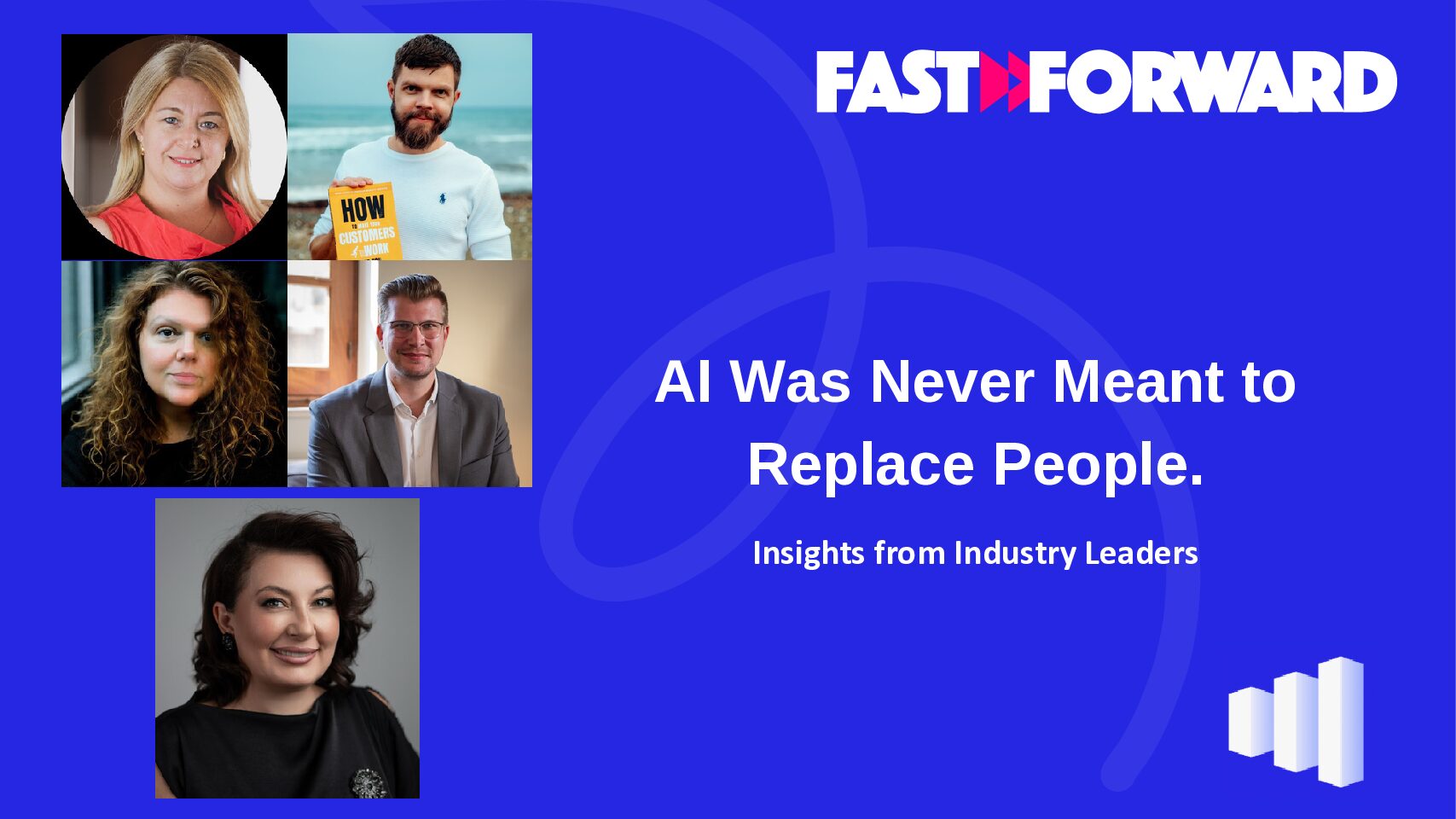
This idea became the foundation of the latest feature written by Marianna Konina, Founder and CEO of Reputation City, for Fastforward magazine. In the article, she brings together the perspectives of Sebastian Niehaus, CEO of Needlestack Technologies, Aletia Trakakis, Co-Founder of Kakushin, Tony Jacobs, Co-Founder of Unplain Media, and Andrea Gémesi, business communication expert and self-leadership coach. Despite representing different industries, each of them arrives at the same conclusion: artificial intelligence delivers its greatest value not by replacing people, but by enabling them to focus on work that requires creativity, empathy, strategic thinking, and leadership.
For Reputation City, these conversations go far beyond the latest AI trends. They help us better understand how technology is reshaping trust, communication, leadership, and ultimately reputation in a world where both people and artificial intelligence increasingly influence business decisions.
AI Isn’t Always the Answer

One of the first ideas explored in the article comes from Sebastian Niehaus, CEO of Needlestack Technologies, who challenges one of the biggest misconceptions surrounding AI.
Today, businesses often rush to adopt artificial intelligence simply because it has become the industry’s biggest buzzword. However, Sebastian argues that AI isn’t automatically the best solution to every problem. In many cases, traditional machine learning delivers faster, more accurate, and more efficient results.
His message is clear: successful innovation doesn’t begin with AI – it begins with understanding the problem you’re trying to solve. The smartest companies are the ones choosing the right technology for the right task.
AI Can Support Empathy – But It Cannot Replace It

A different perspective comes from Aletia Trakakis, Co-Founder of Kakushin, whose work demonstrates how artificial intelligence can improve the lives of people living with dementia.
Through AI-powered technology, behavioral changes can be detected earlier, allowing caregivers and families to respond before problems escalate. Yet despite these impressive capabilities, the technology never replaces the human element.
AI provides insights, whereas people provide compassion.
The conversation highlights an important reminder that applies far beyond healthcare: technology is at its best when it enhances human capabilities rather than attempting to replace them.
The Best AI Strategies Invest in People

For Tony Jacobs, Co-Founder of Unplain Media, artificial intelligence should never be viewed purely as a cost-cutting tool.
Drawing on research into AI adoption across organizations, he explains that businesses achieve the strongest results when AI removes repetitive work while employees are given opportunities to develop new skills, solve more complex challenges, and create greater value.
Companies that invest in people alongside technology consistently outperform those focusing solely on automation.
Ultimately, AI transformation is less about software than it is about leadership.
The Skills AI Can’t Replace

Business communication expert and self-leadership coach Andrea Gémesi offers another important perspective.
As AI becomes increasingly capable of generating content, analyzing information, and automating workflows, the qualities that make us human become even more valuable.
- Critical thinking
- Emotional intelligence.
- Curiosity.
- Adaptability.
- Authentic communication.
These aren’t simply soft skills anymore – they are becoming strategic advantages for businesses operating in an AI-driven world.
One Conversation, One Clear Conclusion
Although each expert approaches artificial intelligence from a different professional background, they all arrive at the same conclusion.
AI shouldn’t be measured by how many people it replaces, but It should be measured by how much time it gives people back.
Time to think strategically, to build relationships, to innovate, to solve problems that require human judgment.
In other words, the real purpose of artificial intelligence is to allow people to focus on what only they can do.
What This Means for Business Reputation
At Reputation City, we believe this conversation extends well beyond productivity or automation.
Artificial intelligence is rapidly becoming another way businesses are evaluated. Large language models learn from trusted digital sources, media publications, executive interviews, corporate websites, and expert commentary. The stronger and more credible a company’s digital presence is, the more accurately AI can understand and describe it.
That is why trust, transparency, and authoritative content matter more than ever.
Every credible interview, published article, expert insight, and trusted media mention contributes to a company’s digital identity – not only for people but increasingly for AI systems as well.
This is exactly why conversations like the one led by Marianna Konina are so valuable. They help move the discussion beyond AI hype and focus on the questions businesses should really be asking:
- How can technology strengthen leadership?
- How can it improve communication?
- How can organizations ensure that trust remains at the center of digital transformation?
At Reputation City, these questions shape the work we do every day. As specialists in Online Reputation Management, Public Relations, Search Engine Reputation Management (SERM), and Generative Exposure Optimization (GEO), we see firsthand that reputation is increasingly becoming part of the information ecosystem that artificial intelligence relies on when interpreting companies and their leaders.
Looking Ahead
Artificial intelligence will continue to evolve.
New tools will emerge. New capabilities will reshape industries. Businesses will continue searching for ways to become faster and more efficient.
But if there is one message shared by every expert featured in Marianna Konina’s latest Fast Forward article, it is this: The future isn’t about replacing people. It’s about giving people more time to think, create, lead, communicate, and build trust.
And perhaps that is the most valuable role artificial intelligence will ever play.
Read the full article in Fast Forward Magazine: “It Was Never Humans vs. Machines. It Was Always About Getting Our Time Back”
You may also be interested in: “Most AI Marketing Isn’t AI. It’s 20-Year-Old Analytics Wearing a New Name”. Discover why many businesses still mistake traditional analytics for artificial intelligence and what that means for marketing, reputation, and strategic decision-making.